Author
5 Signs Your Hiring Process Is Scaring Away Top Talent (Without You Knowing It)
The silence after your job posting goes live should feel promising, not ominous. Yet across conference rooms nationwide, hiring managers stare at applications from candidates who seem perfect on paper but vanish before the final handshake. The uncomfortable truth? Your hiring process might be the invisible barrier standing between your organization and the top talent you desperately need.
Think about the last exceptional candidate who mysteriously withdrew from your process. Was it really a “better opportunity elsewhere,” or did something in your recruitment journey send them running? The modern hiring landscape has shifted dramatically, and what worked five years ago now feels antiquated to candidates who have options. They’re evaluating you just as critically as you’re evaluating them, and their standards have never been higher.
The most insidious part about these hiring process failures is their invisibility. Unlike obvious red flags such as low salary offers or poor company reviews, these issues operate in the shadows, quietly dismantling your talent pipeline before you realize what’s happening. They masquerade as normal business operations while systematically filtering out the very people who could transform your organization.
The Hidden Cost of Hiring Process Friction
Every talented professional carries invisible scars from previous hiring experiences. Picture this scenario: a highly sought-after candidate receives multiple job offers simultaneously. Which process do you think they’ll choose? The one that respects their time, communicates clearly, and demonstrates organizational competence, or the one that feels like navigating a bureaucratic maze blindfolded?
This psychological reality transforms your hiring process from a simple evaluation tool into a competitive differentiator. When top talent has choices, they naturally gravitate toward organizations that signal respect, efficiency, and cultural alignment through their recruitment approach. The companies that understand this principle win the war for talent before the first interview even begins.
The ripple effects extend far beyond individual hiring decisions. When exceptional candidates share their negative experiences with their professional networks, your employer brand suffers damage that takes years to repair. In today’s interconnected world, word travels fast, and hiring process horror stories become cautionary tales that influence future candidate decisions.
Sign #1: Your Application Process Tests Patience Instead of Qualifications
The Endless Digital Obstacle Course
Imagine asking a renowned chef to prove their culinary skills by first completing a 40-page questionnaire about their knife preferences. This scenario seems absurd, yet many hiring processes follow this exact logic. They front-load administrative burden while delaying meaningful skill assessment, creating a frustrating experience that mirrors bureaucratic inefficiency rather than professional evaluation.
The modern application process has evolved into an endurance test that favors persistence over talent. Multi-page forms request information already contained in resumes, while redundant fields force candidates to input the same data multiple times. Each additional step creates another opportunity for exceptional candidates to abandon ship in favor of more streamlined alternatives.
Consider the psychological impact of this approach. When candidates encounter lengthy, repetitive application processes, they subconsciously associate your organization with inefficiency and disrespect for time. These first impressions establish expectations about your company culture, work environment, and operational competence that extend far beyond the hiring decision.
The Time Investment Mismatch
Top talent operates with a different time calculus than other candidates. They’re not desperately seeking any opportunity; they’re strategically evaluating the best fit for their career trajectory. When your application process demands hours of investment before providing any meaningful information about the role or culture, you’ve created an asymmetrical exchange that sophisticated candidates will reject.
This mismatch becomes particularly pronounced when candidates discover that the actual role differs significantly from the initial description. After investing substantial time in your application process, they feel deceived and manipulated, creating negative associations with your brand that persist long after the hiring cycle ends.
Sign #2: Communication Black Holes That Leave Candidates Guessing
The Silence That Speaks Volumes
Professional relationships thrive on clear, consistent communication, yet many hiring processes treat candidates like anonymous applicants rather than potential business partners. When weeks pass without updates, candidates begin crafting narratives to explain the silence. Unfortunately, these internal stories rarely cast your organization in a positive light.
The absence of communication creates anxiety and uncertainty that clouds the candidate’s perception of your company culture. They begin wondering whether this communication style reflects how you treat employees, clients, and business partners. In their minds, your hiring process becomes a preview of your organizational DNA.
Consider how this dynamic affects your most desirable candidates. High-performers typically have multiple opportunities in motion simultaneously. When your process leaves them in limbo, they naturally prioritize organizations that demonstrate respect through consistent updates and clear timelines. Your silence becomes their signal to focus attention elsewhere.
The Feedback Vacuum
After interviews, candidates naturally seek feedback to understand their standing and improve future performance. When organizations provide vague responses or no feedback at all, they miss crucial opportunities to build relationships and maintain positive connections with talented professionals who might be perfect fits for future roles.
This feedback vacuum extends beyond individual candidates to influence your broader talent network. Professionals who receive thoughtful, constructive feedback become advocates for your organization, even when they don’t receive offers. They recommend your company to colleagues, speak positively about your process, and maintain openness to future opportunities. Conversely, candidates left in communication limbo become cautionary voices in their professional circles.
Sign #3: Interview Processes That Signal Organizational Chaos
The Endless Interview Marathon
While thorough evaluation serves important purposes, unnecessarily complex interview processes often reveal more about organizational dysfunction than candidate suitability. When interview rounds multiply without clear purpose, candidates begin questioning whether your decision-making processes suffer from similar inefficiencies.
Exceptional candidates read between the lines of your interview structure. They notice when interviews lack clear objectives, when the same questions get repeated across multiple sessions, or when interviewers seem unprepared or disengaged. These observations shape their perception of your leadership competence and operational sophistication.
The psychological impact extends beyond logistics to affect candidate enthusiasm and engagement. Interview fatigue sets in when processes feel unnecessarily burdensome, causing even interested candidates to approach later stages with reduced energy and commitment. Their excitement transforms into endurance, fundamentally altering the dynamic of your interactions.
Inconsistent Interview Experiences
When different interviewers provide conflicting information about roles, expectations, or company culture, candidates question your organization’s internal alignment and communication effectiveness. These inconsistencies suggest deeper operational challenges that sophisticated professionals prefer to avoid.
The lack of standardized interview approaches also creates fairness concerns that particularly resonate with top talent. When candidates perceive that others might receive different treatment or evaluation criteria, they question whether your organization values equity and consistency in its operations.
Sign #4: Technology Gaps That Create Frustrating Experiences
Outdated Systems and Broken Processes
In our digital-first world, clunky technology sends powerful signals about organizational priorities and capabilities. When candidates encounter broken links, non-responsive portals, or systems that don’t work across different devices, they naturally wonder whether your internal technology infrastructure suffers from similar limitations.
These technological shortcomings become particularly problematic when targeting digitally savvy professionals who expect seamless, intuitive experiences. Their daily work involves sophisticated tools and streamlined processes, making your outdated systems feel jarring and unprofessional by comparison.
The frustration compounds when candidates attempt to navigate these systems while managing their current job responsibilities. Technical difficulties that require multiple attempts or workarounds create unnecessary stress that colors their entire perception of your organization’s operational competence.
The Mobile Experience Disaster
Modern professionals increasingly manage their job searches through mobile devices during commutes, breaks, and other brief windows of availability. When your application and communication systems don’t function properly on smartphones and tablets, you’ve immediately excluded a significant portion of your target talent pool from meaningful participation in your process.
This mobile accessibility issue disproportionately affects younger professionals and those in technology-forward industries who represent the future of many organizations. Their expectations around digital experiences have been shaped by consumer applications that prioritize user experience and mobile optimization.
Sign #5: Lack of Cultural Transparency That Hides Red Flags
The Polished Facade Problem
Experienced candidates possess sophisticated radar for organizational authenticity. When hiring processes present overly polished versions of company culture without acknowledging challenges or growth areas, top talent becomes skeptical about the gap between marketing and reality.
This authenticity deficit becomes particularly apparent during interviews when candidates ask probing questions about challenges, growth opportunities, or areas for improvement. Generic, overly positive responses signal that your organization either lacks self-awareness or deliberately obscures potential concerns.
Smart candidates want to understand both the opportunities and challenges they’ll face in new roles. When your process avoids these conversations, they assume you’re hiding significant problems that will become apparent after they’ve already committed to joining your organization.
Missing Cultural Fit Assessment
Beyond skills evaluation, top performers seek environments where they can thrive personally and professionally. When hiring processes focus exclusively on technical qualifications while ignoring cultural alignment, both parties risk mismatches that lead to early turnover and mutual disappointment.
The absence of meaningful cultural exploration during interviews suggests that your organization hasn’t thoughtfully defined its values or doesn’t prioritize cultural fit in hiring decisions. This lack of intentionality around culture concerns candidates who understand the importance of environmental factors in professional success and satisfaction.
The Path Forward: Transforming Your Hiring Process
Embracing Human-Centered Efficiency
The solution to these hiring process challenges doesn’t require choosing between thoroughness and efficiency. Instead, it demands a fundamental shift toward human-centered design that prioritizes candidate experience while maintaining rigorous evaluation standards.
This transformation begins with viewing your hiring process through the candidate’s eyes. Every step should add value for both parties while moving toward a clear decision point. When elements of your process serve only internal convenience without benefiting the candidate evaluation, they become unnecessary friction that drives away top talent.
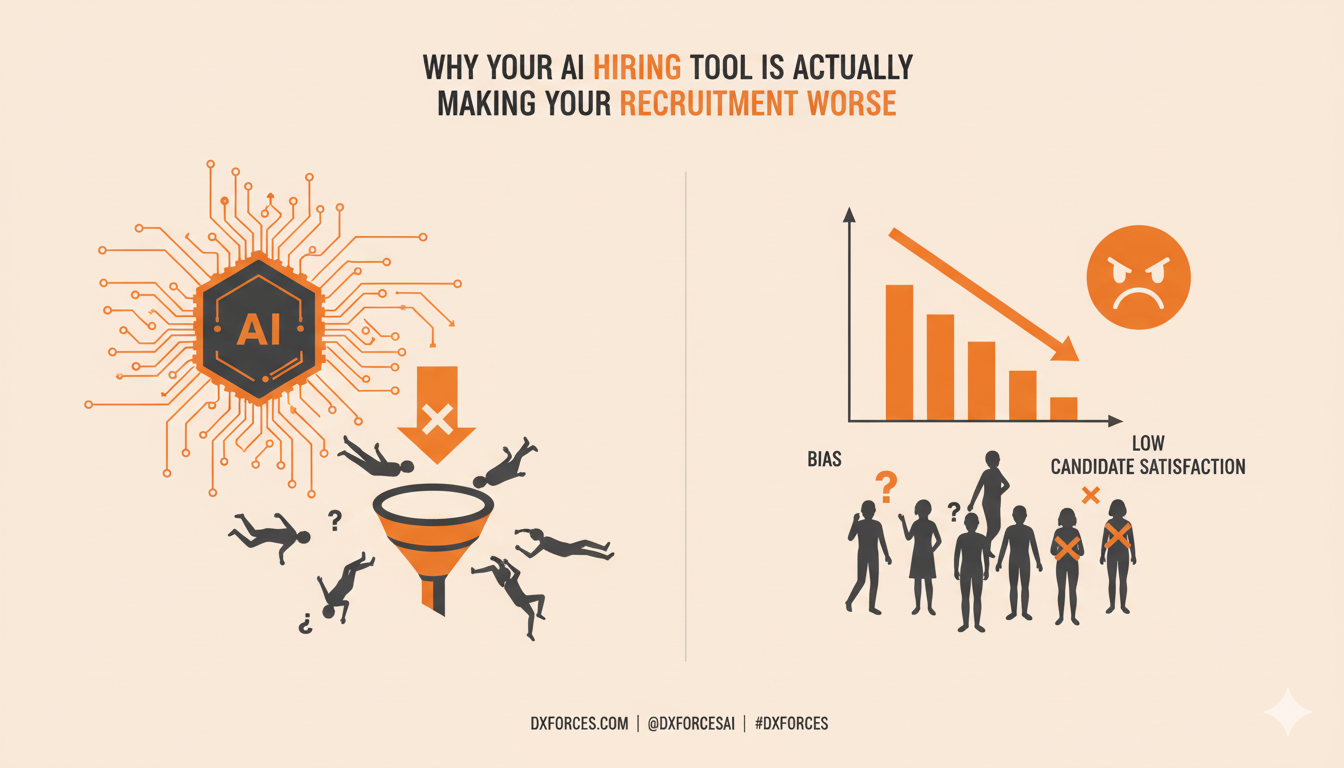
Modern AI-powered hiring solutions offer promising paths forward by automating administrative tasks while preserving human judgment in critical evaluation areas. These technologies can eliminate repetitive data entry, provide consistent communication, and streamline scheduling while ensuring that meaningful human interactions remain at the center of your process.
Building Competitive Advantage Through Process Excellence
Organizations that invest in hiring process optimization gain sustainable competitive advantages in talent acquisition. When your process becomes a positive differentiator rather than a neutral necessity, you attract better candidates and create stronger first impressions that influence long-term employee engagement and retention.
This process excellence also generates valuable network effects. Candidates who experience respectful, efficient hiring processes become ambassadors for your employer brand, regardless of whether they receive offers. These positive experiences ripple through professional networks, enhancing your reputation and expanding your talent pipeline for future hiring needs.
Taking Action: Your Next Steps
The journey toward hiring process excellence begins with honest self-assessment. Review your current process from the candidate’s perspective, identifying friction points that might be invisible from your internal vantage point. Ask recent hires about their experience and what nearly caused them to withdraw from your process.
Consider implementing regular candidate experience surveys to gather feedback from both successful hires and those who chose other opportunities. This data provides crucial insights into your process strengths and improvement areas that can guide strategic enhancements.
Most importantly, recognize that hiring process optimization represents an ongoing commitment rather than a one-time fix. As candidate expectations evolve and new technologies emerge, your processes must adapt to maintain competitive advantage in the war for talent.
The choice facing your organization is clear: continue operating with hiring processes that inadvertently repel the talent you need most, or commit to the systematic improvements that will transform your recruitment from a necessary evil into a powerful competitive weapon. The exceptional candidates you’re losing today won’t wait forever for you to figure this out.
Take a moment to reflect on your current hiring process. Which of these warning signs resonated most strongly with your experience? What will you change first to ensure that your next exceptional candidate chooses your opportunity over all others?